


Am I constitutionally wired to be hornier than the average woman, or is there a "nurture" component that I have internalized? Today, we examine some of the external factors influencing a woman's high libido — and her willingness to act on it.
I don't think that sexual expression is purely an individual thing. Women have to navigate the cultural landscape, discerning what's safe and what will help them resource for survival. Our environment and economy impact if and how we choose to have kids, when, with whom, and how we date.
In some ways, I'm privileged to be in the "right" time and place. My circumstances allowed me to explore sexuality as much as I have; these factors overlap and synergize. I don't take them for granted.
Financial Background and Ability to Meet Physical Needs
First things first: the privilege of financial security goes a long way. All of the following seemingly basic things contribute to stress reduction, hormone health, and regular ovulation:
- Access to healthcare — reproductive and otherwise
- The time and money to foster a nutritious diet
- Not worrying about how you'll pay your bills on time
- Getting adequate sleep
- Having the time to exercise
- Knowing that the cops will somewhat value my life
Owning a business and setting my schedule helps with some of the above points. However, whether you're a 9–5 staffer, solopreneur, or homemaker, survival comes first.
Then follows the physical expenditure required to ovulate and build up the uterine lining. If a cis woman's body senses that it's super stressed and not adequately resourced, it might not release adequate sex hormones to have a baby. At that point, trying arousal gels can help a little, but it's like putting a Band-Aid on a broken arm.
Similarly, some aphrodisiac foods work, but the effect isn't necessarily super direct. Oysters might look a certain way, but you can credit zinc and protein for their roles in nourishing one's reproductive system.
Kinship, Community Care, and Family Structures
If I got pregnant out of wedlock, it wouldn't be stress-free per se, but I'd at least trust that I have the resources to manage it. Being a single mom wouldn't necessarily mean I'd have to do everything alone.
For one, I have an older queer sibling who wants to have his own kids but can't. He has expressed multiple times that he'd be happy to provide for and help raise a niece or nephew.
What's more, I came from a culture where multigenerational households — with grandparents, aunts, and uncles under one roof, raising a new generation of children — were considered normal. It's not as stigmatized as it seems in the United States, where the nuclear household reigns.
In other words, I have enough of a social safety net that an accidental pregnancy would not only be tolerated but welcomed by my family. And I don't have to worry about my safety being inextricably linked to appeasing one provider as an intimate partner.
With the privilege of backups upon backups upon backups, that's one less sex-related stressor for me to worry about.
Expectations of Caregiving Placed on Me (Or Not)
On the flip side, I don't have to care for a child, sibling, spouse, or aging parents yet. I may eventually, but I didn't internalize the message that my worth depended on how well I took care of others. And I can't say the same for all other women.
So many women pride themselves on their superhuman caregiving, then struggle with prioritizing that same level of love for themselves:
- Who's taking care of them?
- Who celebrates them?
- How do they relieve the pressure to be the perfect wife, mother, daughter, etc.?
- What brings them joy when not defined by their relations to others?
On the one hand, I think the term "self-care" has largely been corporatized and stripped of its political context. At the same time, I understand the intent when sex toy marketing suggests practicing self-love by buying more toys.
Ultimately, it's about what the toys symbolize — that you deserve time for yourself to feel good and do you for you. And at least to the same extent that you buy gifts for others, you deserve nice experiences, too.
For a woman to prioritize her pleasure can feel like a radical act in a culture where magazine headlines at the grocery store checkout shout, "69 MORE WAYS TO BLOW HIS MIND IN BED!" And the luxury of prioritizing my joy outside the bedroom has made all the difference in the bedroom.
Finding Like-Minded People and Redefining "Normalcy"
My Millennial self has said, "Naruto fanfiction was my sexual awakening," and strangers my age have nodded, "That is so valid."
It's now relatively easy to connect to a community of people similar to you. Contrast that with life before the advent of the internet, when sexual urges, queerness, and kinks were far more hush-hush.
If you were a sadist in a very small Catholic town pre-internet, you may have thought you were a monster who would burn in hell for the rest of eternity. And it's understandable to self-isolate and ruminate in shame when you think nobody around you would even remotely get it.
Meanwhile, my adolescence started with Quizilla's lemons and limes, then anonymous Tumblr porn .gif reblogs, then progressed to FetLife. The idea of women being the subjects of pleasure — irrespective of the male gaze — had been repeatedly demonstrated to me.
In high school, literally my first reading in AP US History was called "Puritans and Sex." That class made it clear that sexuality was, is, and will be a huge part of our collective consciousness as humans.
You couldn't slut-shame me. Not when I knew that:
- I was far from alone in my fantasies and desires.
- Haters gonna hate. Their judgments of my sexual expression are clouded by their insecurities (and sometimes ignorance of how bodies work).
- The legal, risk-aware, consensual activities I do are ultimately nobody else's business but my partners' and my own.
Internalized Narratives From External Sources About Pleasure
Sex education that revolves around STIs and pregnancy prevention is like a cooking class where you only talk about foodborne illnesses. It's an incomplete picture. What about how great food can be?
This section might be a testament to my innate curiosity as much as my external circumstances, but it's still worth mentioning. The narratives we hear about female pleasure (or lack thereof) in childhood and adolescence can leave a lasting impression on us:
- I learned about the clitoris from a magazine — and found mine pretty early on
- How I learned about pelvic floor exercises was a similar deal via another women's magazine.
- I found an abundance of romantic and erotic fan fiction written by girls for girls. There was never, ever any doubt for me that girls get horny, too.
- I was a geek for Mary Roach's science journalism in high school, including Bonk, her book about the silliness of sex research. The accompanying TED talk about orgasms is pretty great, too.
- Bonk also mentioned breath and energy orgasms — and from there, I read Barbara Carellas's book, Urban Tantra, which taught me the techniques and the importance of mindset in pleasure.
- At 19, I wondered, "What the hell is a jelly dildo made of?" and went down the Google rabbit hole to find the beginnings of the sex toy review community.
Two persistent undercurrents were at play:
- I was fascinated by the human body.
- I consumed a lot of media written by other girls and women — who clearly, enthusiastically enjoyed what they were doing.
The latter meant my perceptions of sexuality were rooted in what women enjoyed. Further, it decentralized the penis as the pinnacle of pleasure, expanding my definition of what sex could look like. By many people's standards, that's not a "traditional" point of view. But prioritizing my pleasure is my "normal."
An Abundance of Men Who Give a Shit About My Pleasure
Since I attended a STEM-focused school with a gender ratio of 2 boys to one girl, my experiences were quite different from the average hetero person's. I had many close male friends and still do — my formative experiences with them were often positive.
That's not to say that the guys around me were all mature or competent (lol), but at least I had a baseline understanding that plenty of them were happy to serve me.
What's more, despite my first time's awkwardness and discomfort, my partner was undoubtedly enthusiastic about going down on me. Even when it wasn't yet standard for me to have orgasms during partner play, they still at least tried to take care of me before, during, and after. And they often asked, "What did you like and what didn't you like?"
Excellent communication about sex was my baseline. By the time I encountered a dude who didn't give oral or care about his partner's pleasure, he was the weird one to me. Once multiple orgasms were consistent for me — through my solo work meditating, Kegeling, and deep penetration — that only further raised the bar for partners.
It reached the point where I average 10 of mine for one of theirs. And I seldom question whether I'll come when having partnered sex — casual or otherwise. (If I don't think I'm likely to orgasm during foreplay, I usually don't escalate it beyond that.)
The following hetero concerns don't apply to me:
- "Hahahahaha, men can't find the clit."
- "Hahahaha, I'm not going to come anyway. EXCEPT TO MY SENSES."
- "If you have to ask whether she came, she didn't."
…but they're unfortunately a reality for many straight women. And yeah, if you've had mostly negative experiences with sex, it may take time to gather evidence contrary to that imprint. I don't blame you for not wanting to engage in it with a partner.
Closing Thoughts (i.e., It's Never "Just" You!)
I've previously written a separate, in-depth explanation about the reasons for the orgasm gap in hetero couples. (Hint: It's not because vulvas and vaginas are complicated!)
But it's not "just" about the body parts, nor does buying a vibrator in the name of self-love solve the problem at the root. Furthermore, sexual shame and repression aren't "just" about you. They're also about the social and political environment in which you:
- Formed your beliefs about the world and what normalcy means to you
- Developed your defense mechanisms for navigating the people around you
- Decided which pleasures were safe (or not) to pursue
I might be somewhat liberated per my own volition, but I'm also lucky in many ways that added up to big orgasms over time.
How have your upbringing and circumstances shaped the way you date and have sex?
This post was sponsored. As always, my words are my own. The external links don't necessarily reflect my views.
Discover more from Super Smash Cache
Subscribe to get the latest posts sent to your email.
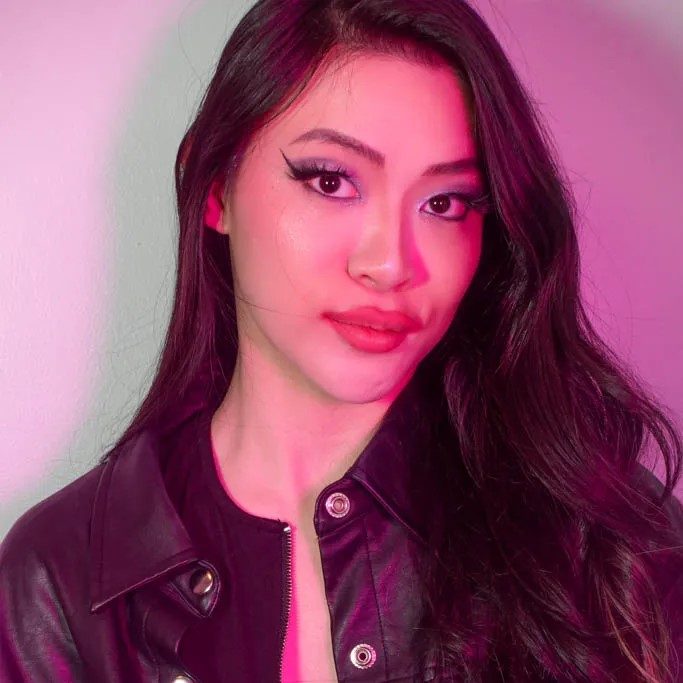
PLEASURE PRINCESS. COMPACT, HIGH-CAPACITY HUMAN. CERVIX SORCERESS.
I've tested over 400 sex toys and love diving deep for cervical orgasms, A‑spot stimulation, and kinky odysseys into the subconscious.
Mesmerizing mindfucking or physical fisting? Opening books or legs? Why not all of the above?
Can't get enough?
Read more about me, my FAQs, and my pleasure protocol/philosophy
Leave a tip via Ko-Fi or PayPal



Comments
One comment on “High Libido Woman: Nature or Nurture?”
Reading this made me realize how much being a queer person who though I’m somewhat androphilic views cis men as entirely optional to my sexual and romantic life if not my professional one has impacted my ability to take up sexual space.